Mori Matcha case study: 4 weeks from Shopify template to live premium brand


From Shopify template to conversion-built premium brand: live in 4 weeks.
Mori Matcha imports single-origin ceremonial matcha from Uji, Kyoto. It was founded by a couple who spent years carrying tins back to the Netherlands in their suitcases before finally bringing the supply chain with them. They arrived with a name, a genuinely premium product, and a template store that was functional at best but gave a passive buyer no reason to believe either. Everything needed to justify the price and position was true. None of it was on the site.
What changed after launch.
Conversion rate after update
Site relaunched
Goals.
• Make a premium price self-evident. A buyer comparing a €24.95 tin against €8 supermarket powder had no way to see what they were paying for. • Solve the "which one do I buy?" problem. Grade language (ceremonial, culinary, first harvest) means nothing to a first-time buyer, and the wrong first purchase kills the repeat order. • Move the store beyond single-tin transactions. Matcha is consumed weekly. The site was selling it like a one-off gift. • Build a brand identity with enough conviction to compete. The template positioned Mori as a reseller, not a sourcing brand with a point of view. • Hand over a store the founders can run and extend themselves, without a designer sitting between them and every content change.
Not just a nice design upgrade. A rebuilt commercial argument, section by section.
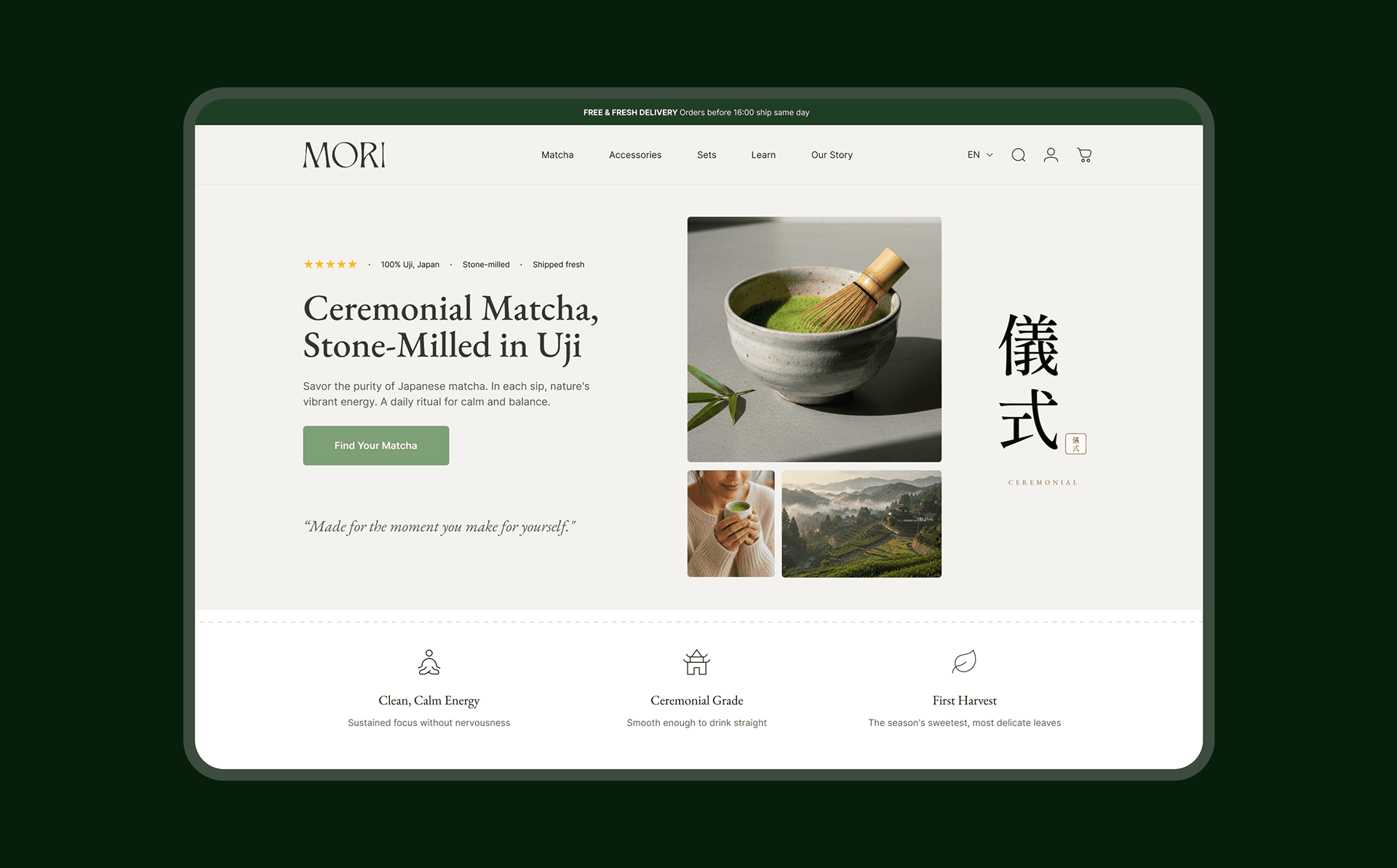
From a standard Shopify template to a conversion-focused ecommerce site Clearer messaging: Replaced a vague headline with a concise, SEO-aligned headline and supporting copy that explains what sets the brand apart. Stronger visuals: Replaced the generic stock-image banner with fresh imagery and distinctive brand elements. Benefits at a glance: Turned an unfocused text block into scannable selling points, supported by new icons. Simpler shopping: Replaced categories that required buyers to understand grades and graphics with a use-case carousel, helping them shop by what they need. Visible social proof: Brought the brand’s strongest reviews from across platforms onto the homepage, where previously none were shown.


Every screen answering a purchase objection.
• Reframed the price as cost per cup: 30g, 40 servings, €0.75 a cup. The comparison stops being supermarket powder and becomes the café latte the buyer is replacing. • Named delivery date in the buy box ("In Stock, get it by Saturday"), removing timing doubt at the decision point rather than at checkout. • A four-pillar provenance module (cold-stored, steamed not roasted, whole-leaf, Uji-grown) built as a reusable component and repeated across product, story and education pages, so the sourcing argument compounds instead of being made once.
Product page, before and after.
Drag to compare

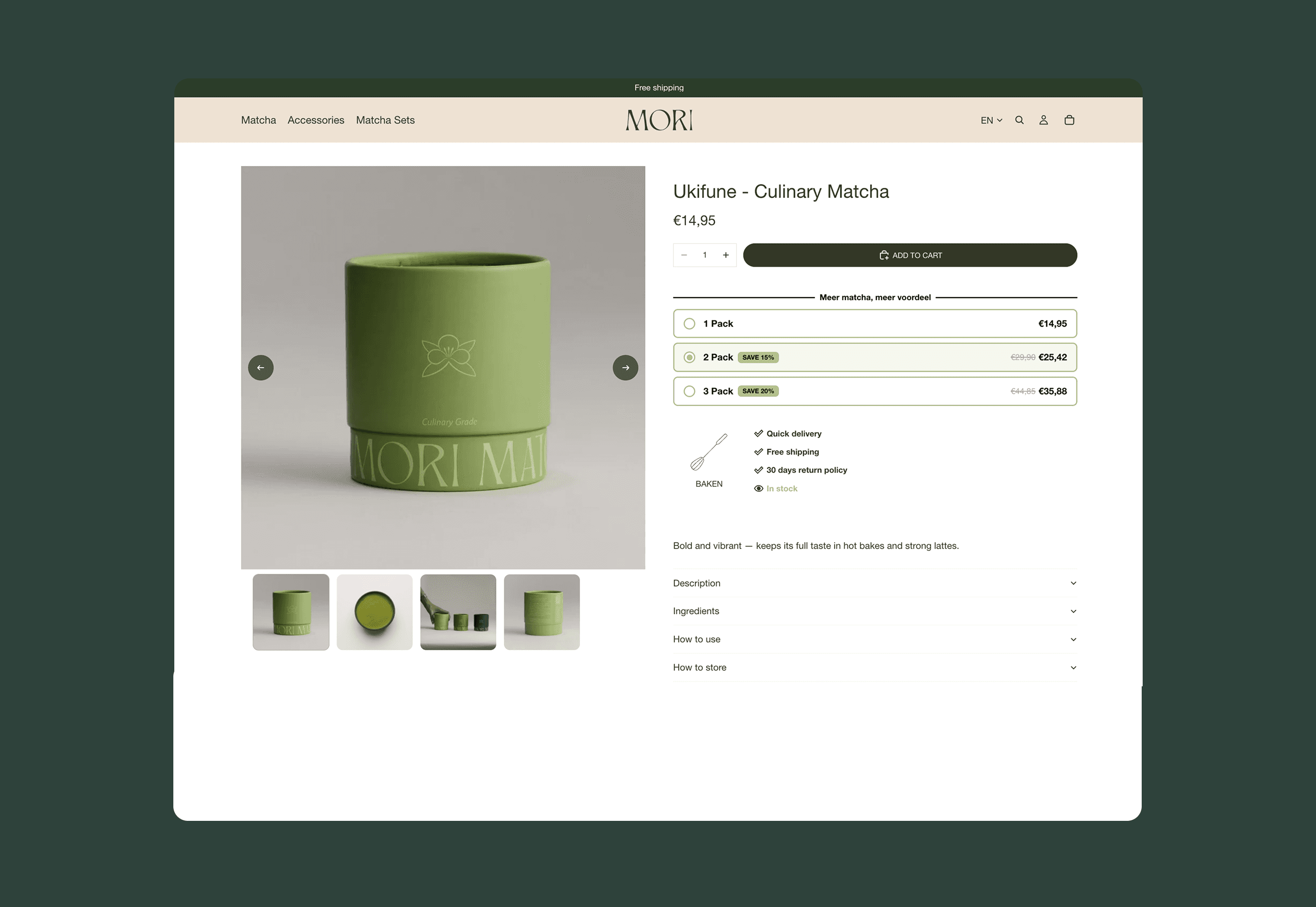 BeforeAfter
What this delivered.
Mori launched with a store that argues its own case. The premium price is justified on the page rather than defended over email. The range self-selects, so first-time buyers land on the right tin instead of the cheapest one. And the bundle structure gives the brand an AOV lever it didn't previously have. The founders now own a componentised Shopify build they can extend (new SKUs, new education content, new markets) without redesign work. The sourcing story that used to live in a suitcase anecdote is now structural: it appears on every page a buyer touches, in a form the team can maintain themselves.
Every design decision came with a clear explanation of how it would improve performance. The focus was always on what's truly needed to optimise both conversion and usability.

Caspar M.
Co-founder, Mori Matcha
Next case