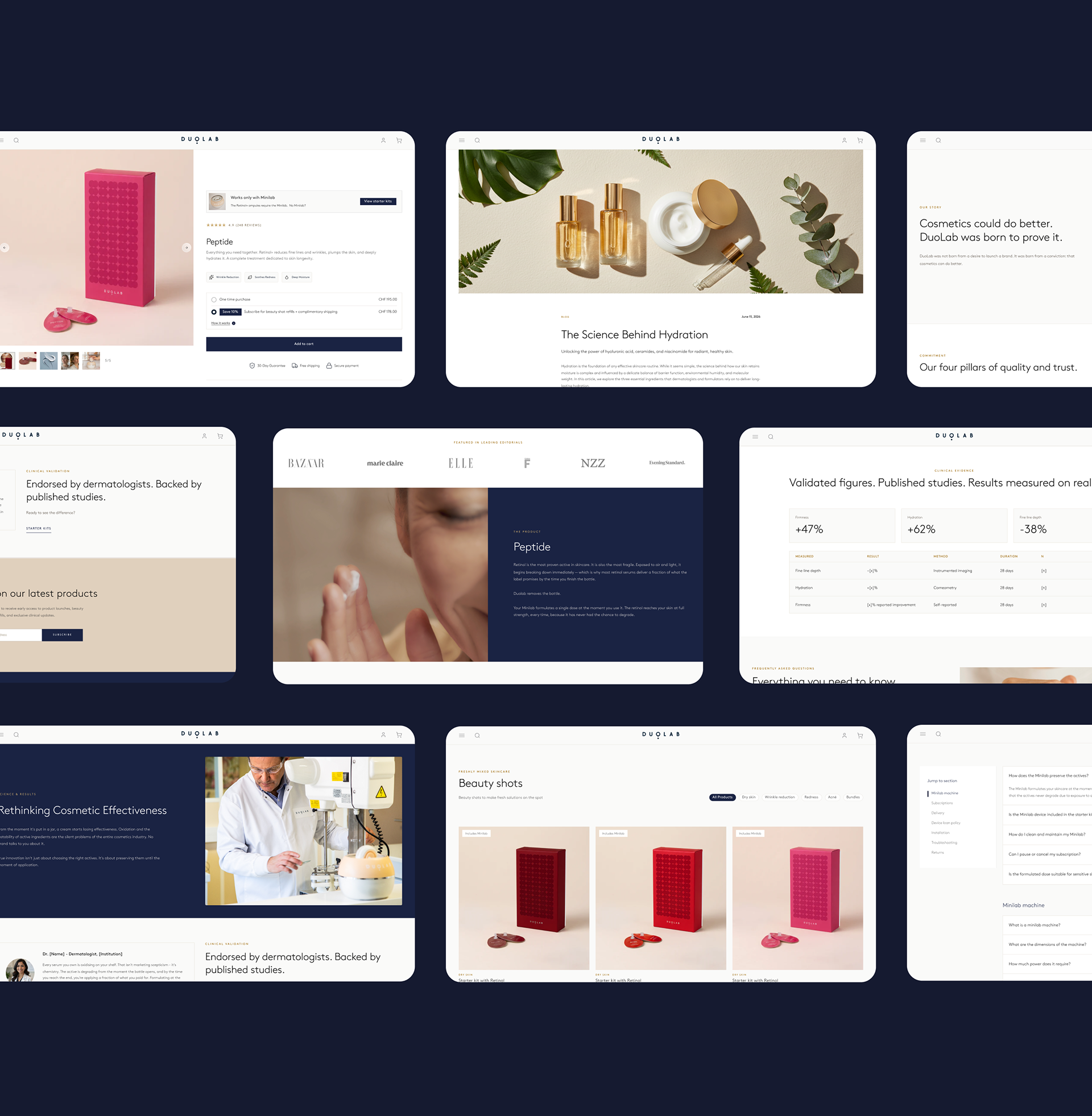
Making a Complex Beauty Product Easy to Buy
A Geneva-based premium skincare brand selling a device-and-pod system: a countertop unit that formulates a single fresh dose at the point of use, paired with a range of active consumables. The product argument is strong — every cream degrades from the moment it's mixed in a factory, and this one doesn't mix until the customer does.
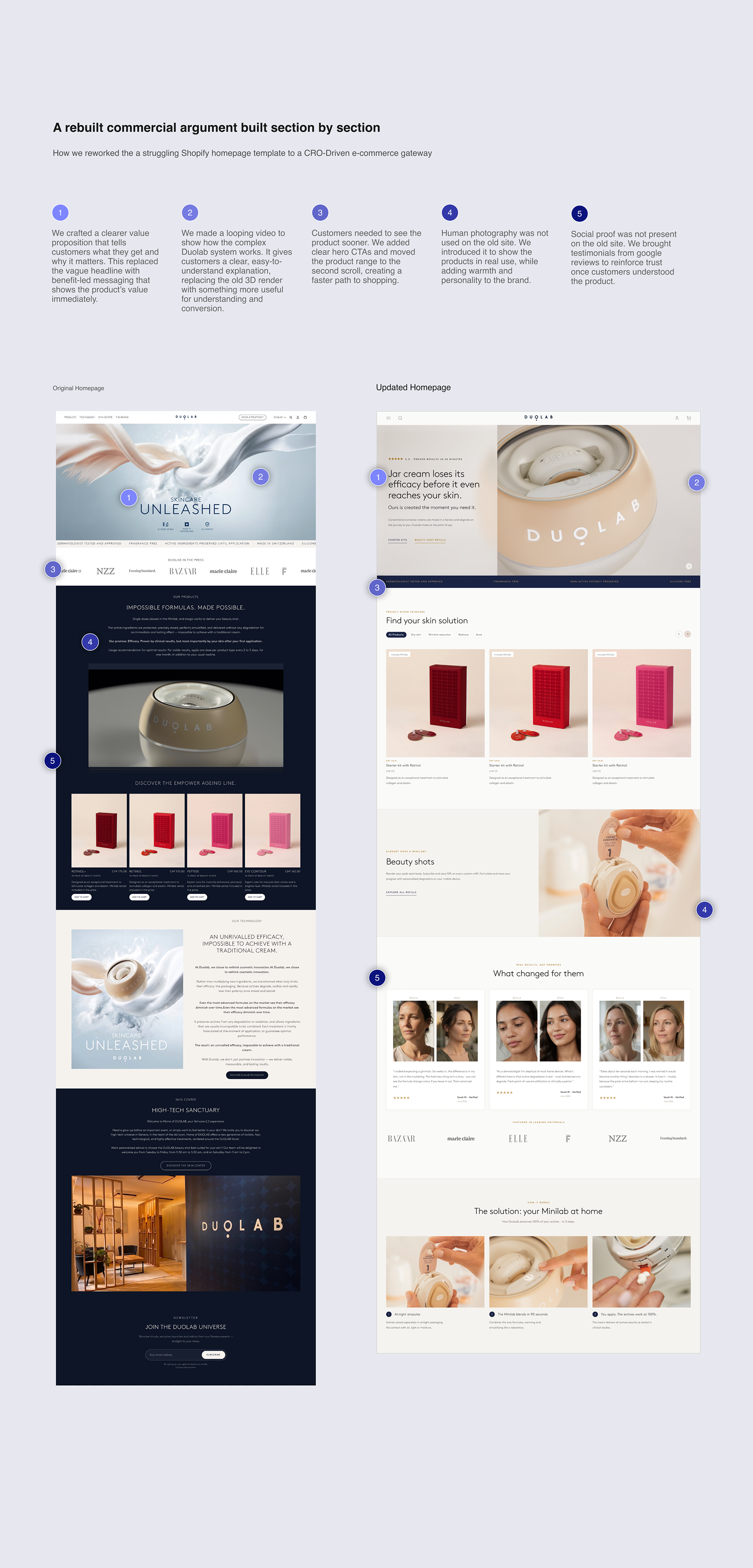
What they had online didn't look like beauty. It read as B2B lab equipment — a technical product with a spec sheet, sitting in the wrong category entirely. A month after launch, no meaningful sales.
CRO / Taxonomy / UX Wireframes / UI prototyping / Interaction design / Content
Site: duolab.com
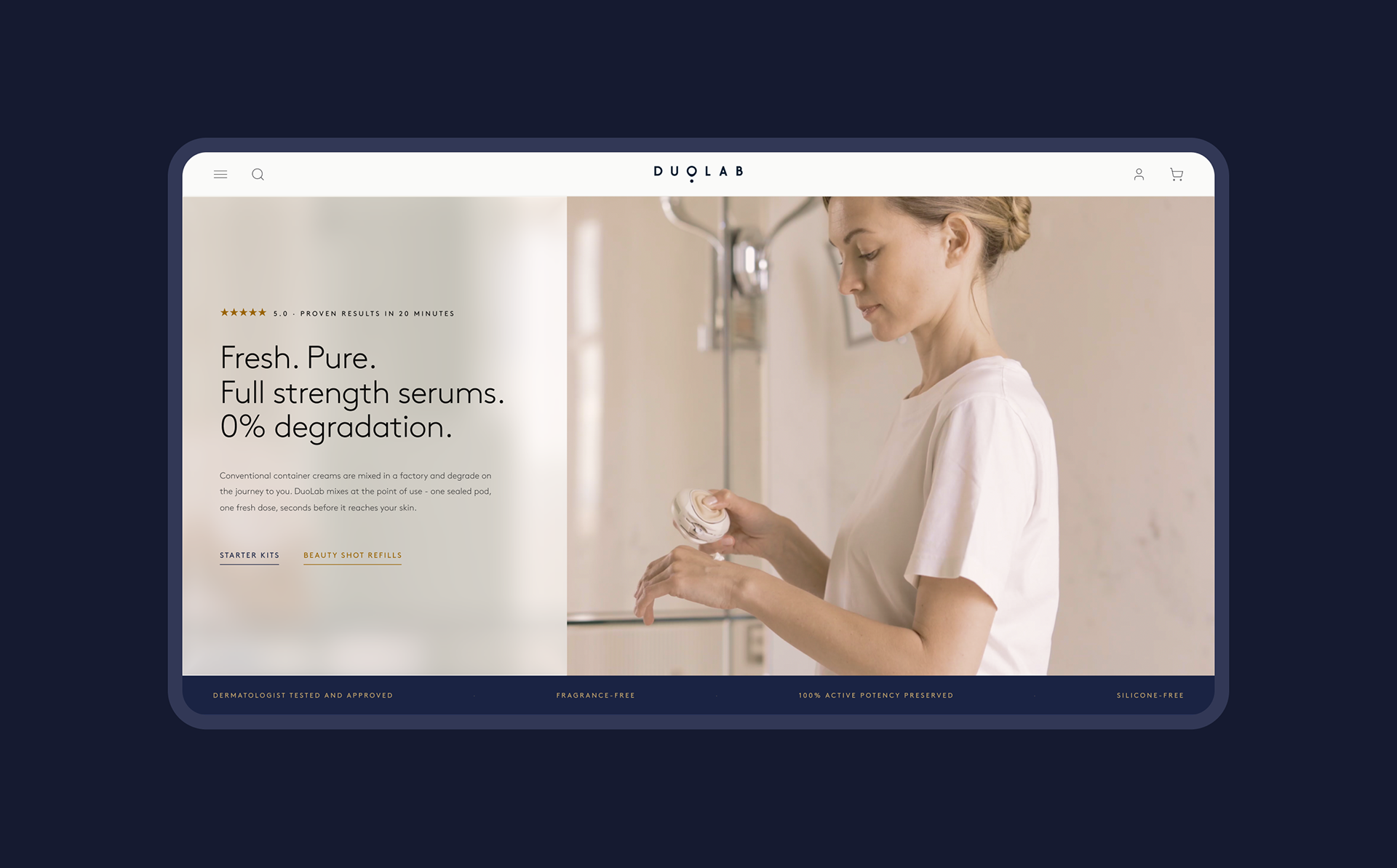
What our Audit Found
We audited the live site page by page, worked the cold visitor journey
• The site read more as B2B lab equipment. Spec-sheet framing where a beauty buyer expects benefit and result
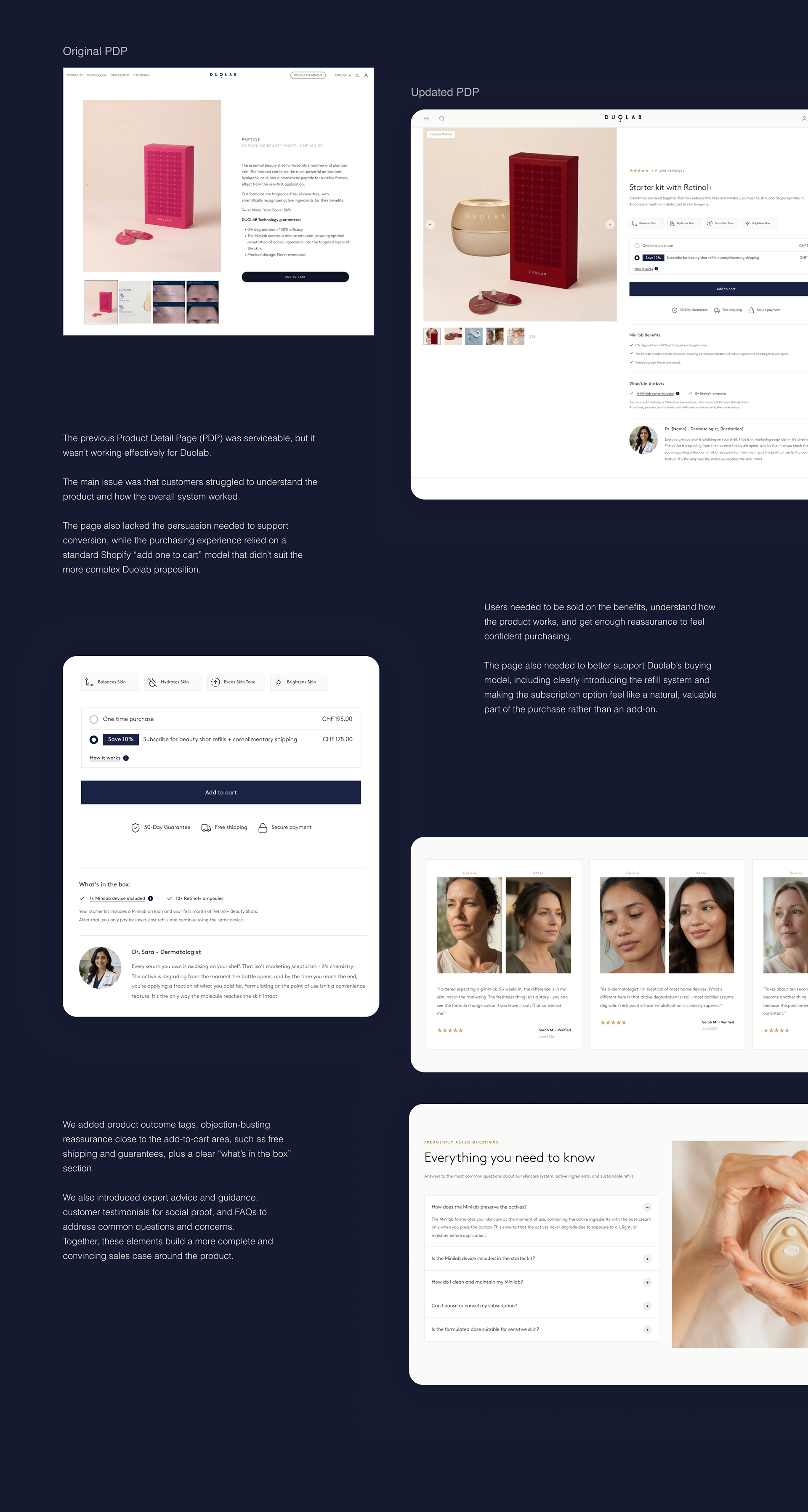
• Cold traffic landed on pod pages carrying a price and an add-to-cart. Nothing on the way there told them a device came first or how to use it.
• Pages referenced components as though the visitor owned the system already
• The whole site lacked conversion framework - social proof, objection busters and clarity was missing
Design sat on top of the problem. Comprehension broke at the structural level, so rebuilding the same site to a higher design standard only would have shipped a better-looking version of the issues.
We rebuilt the commercial model first and built the pages to serve it.
We rebuilt the commercial model first and built the pages to serve it.
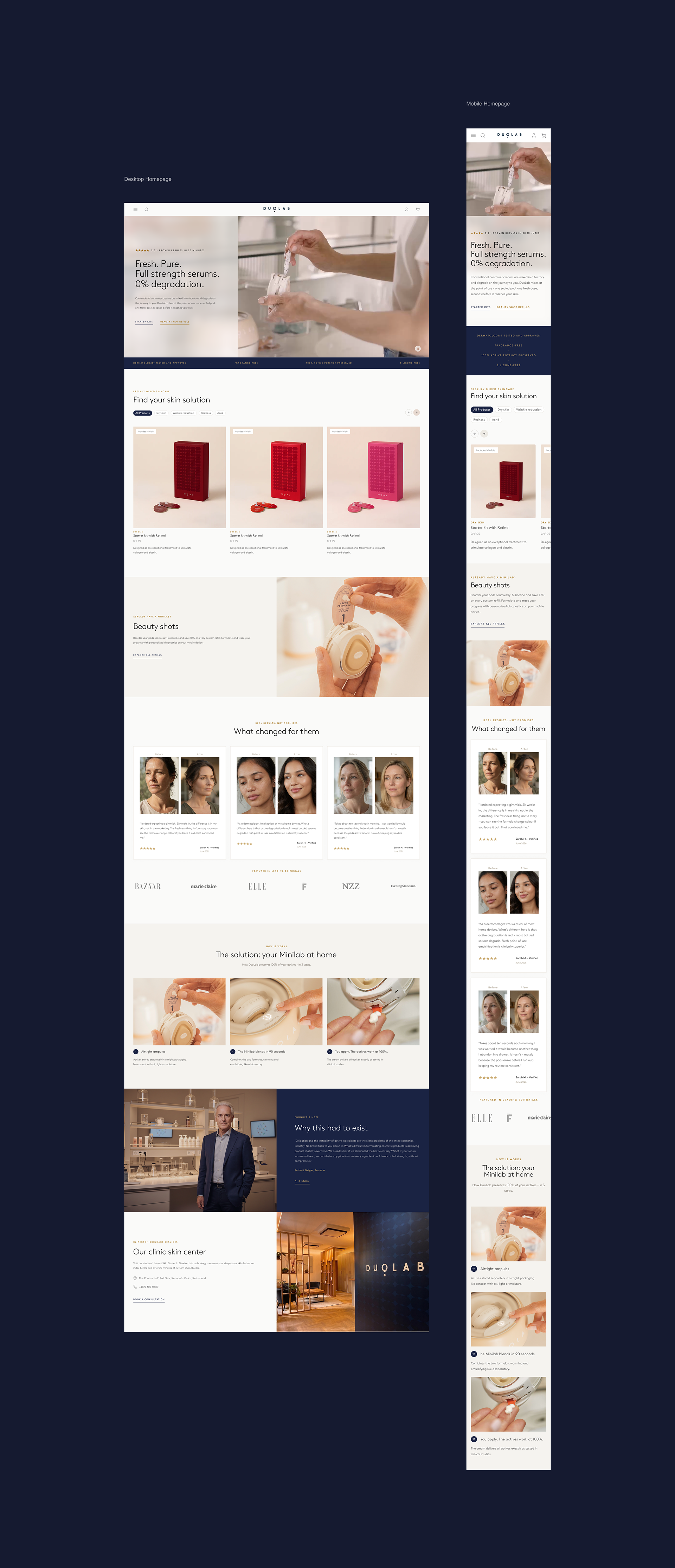
Restructuring the Site to Sell
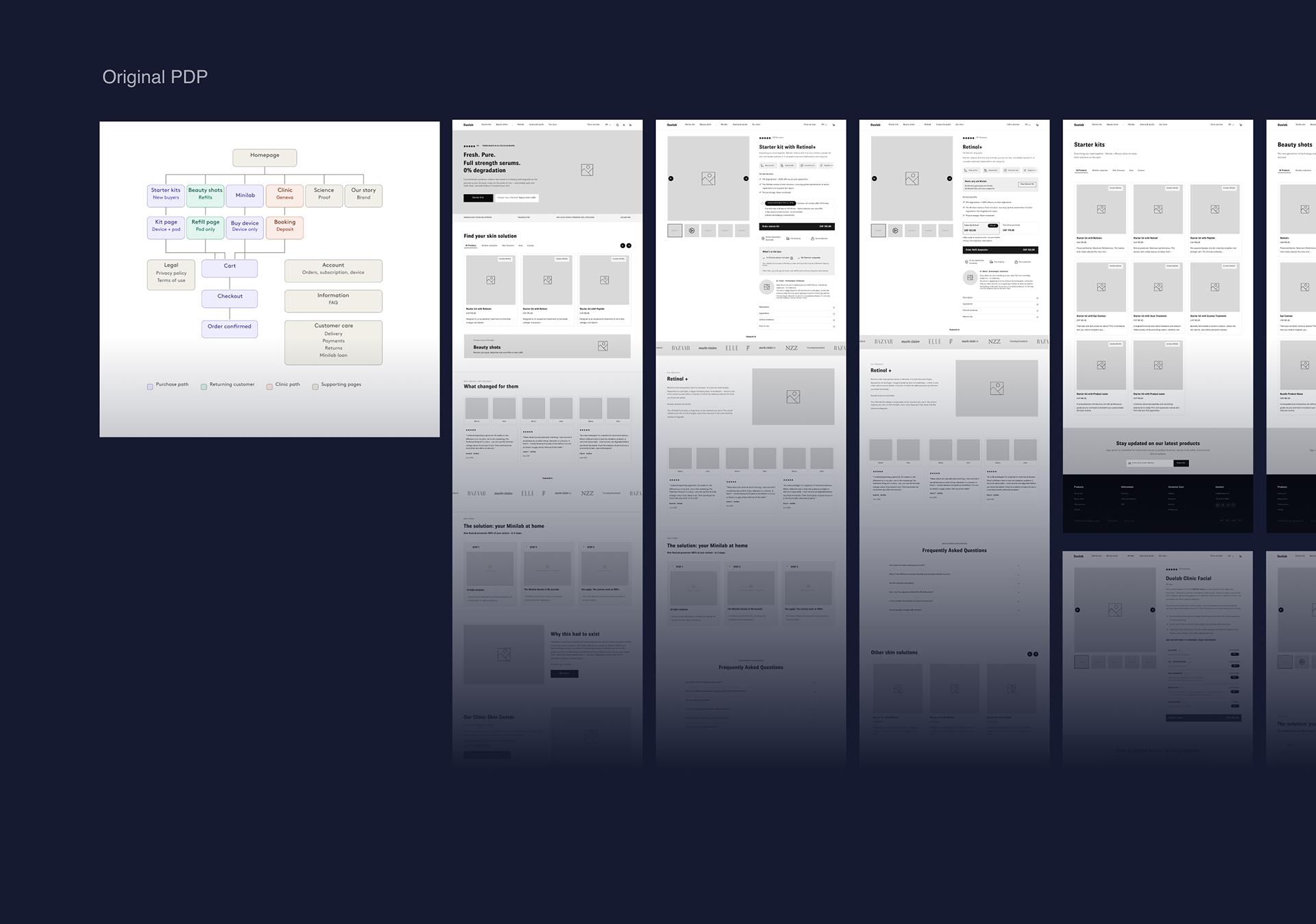
We rebuilt from the sitemap up, through five versions, before writing a page spec. Structure follows the commercial model.
Two product pages, two jobs.
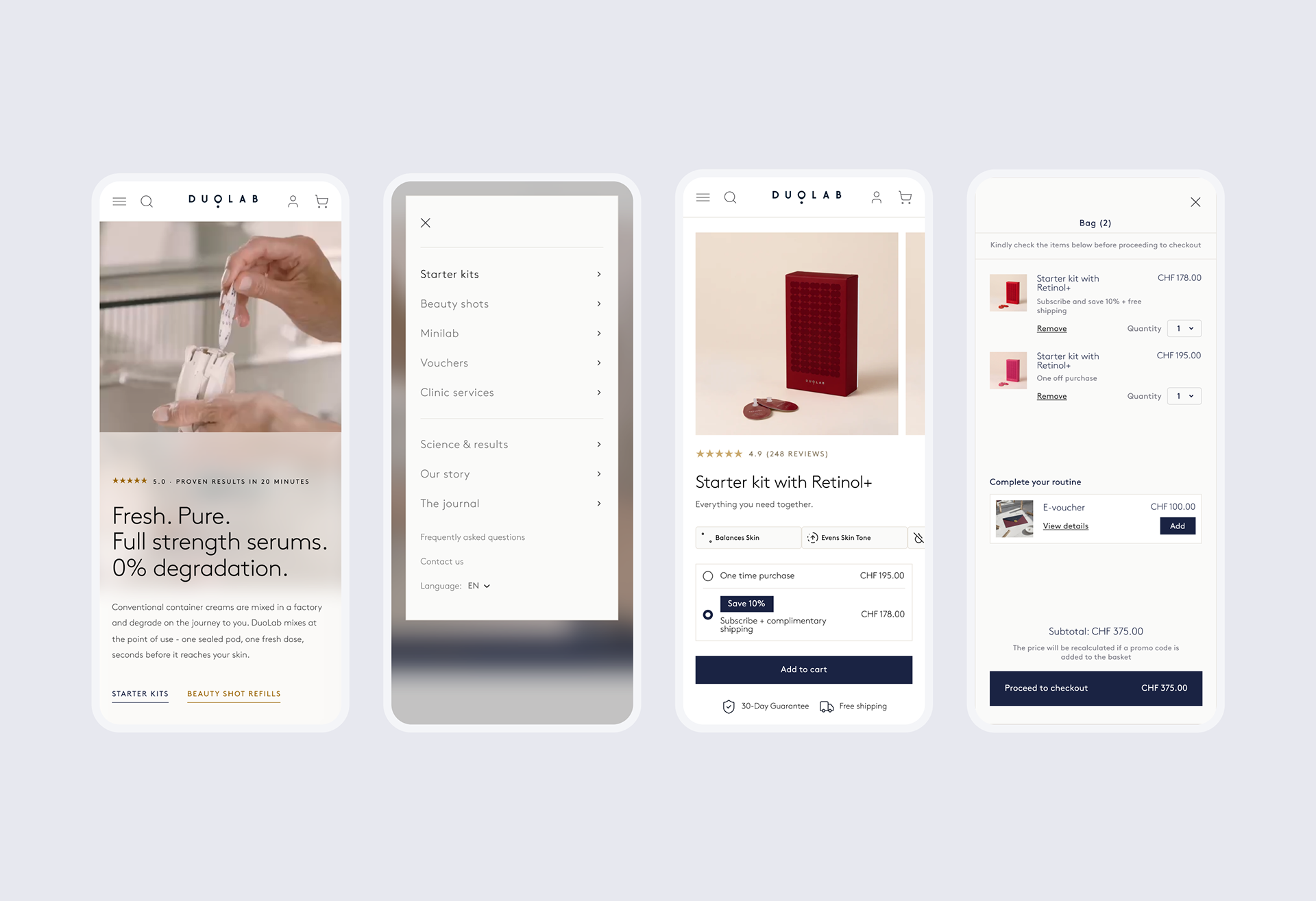
• A Starter Kit page acquires cold traffic and explains the system in SKU form.
• A pods page lets owners reorder in three clicks without seeing the device sold to them again
• A Starter Kit page acquires cold traffic and explains the system in SKU form.
• A pods page lets owners reorder in three clicks without seeing the device sold to them again
The homepage carries two marked journeys for new and returning visitors, instead of splitting traffic across separate entry points
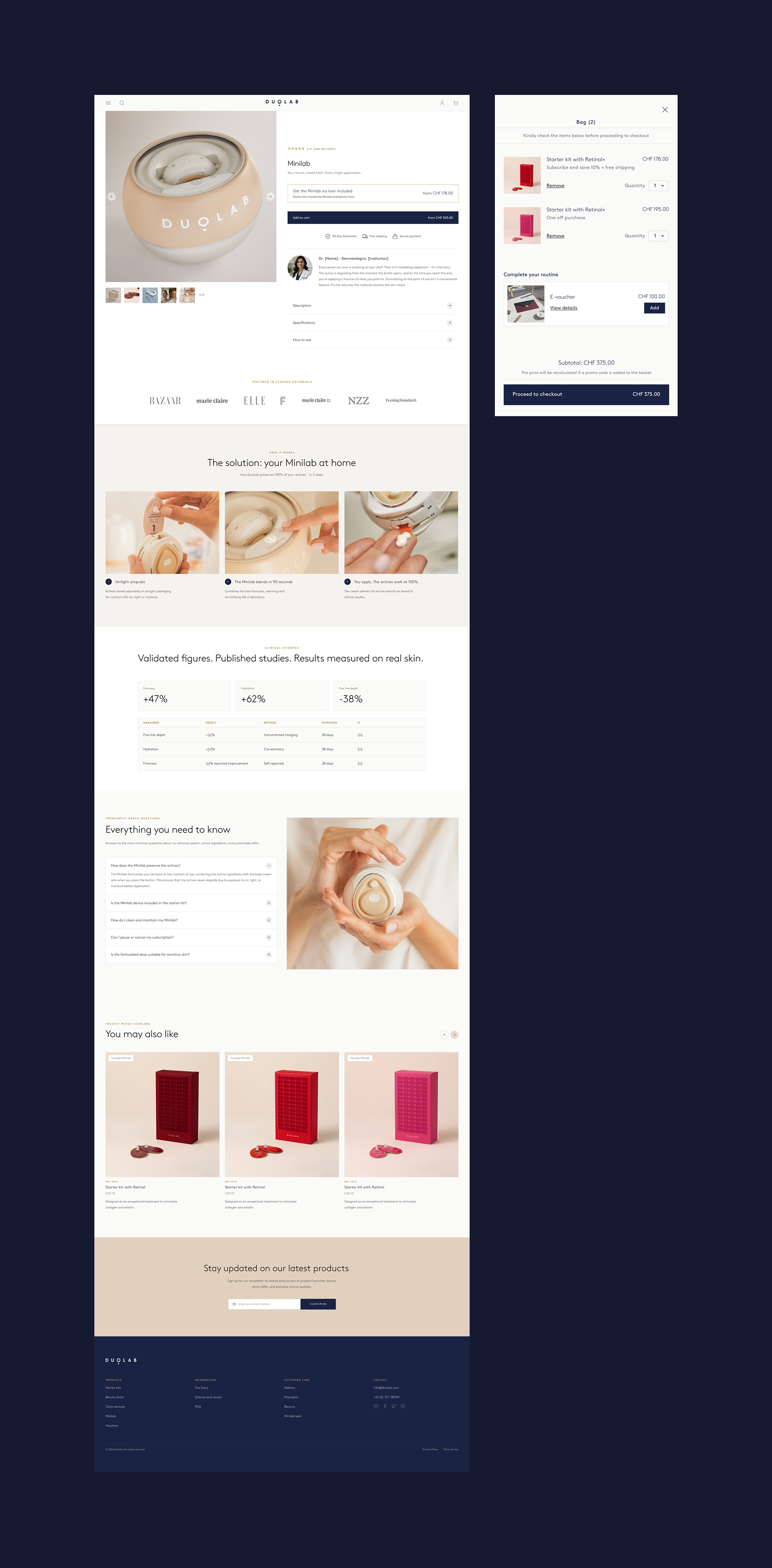
A cart-level gate stops a second device shipping to someone who owns one
What This Delivered
A site that sells, informs and positions for a recurring higher average order value.
The brand now reads as premium skincare. A cold visitor recognises the category in seconds and the price holds up against the shelf it sits on. Product structure carries the selling: first-time visitors reach the system rather than the consumable, which lifts entry order value above a single refill. Buyers get a fast replenishment path with a subscription mechanic matched to how they consume the product, which turns one-time buyers into recurring revenue.